
Preconception Checklist 3 Months Before Trying to Conceive
A practical, month-by-month preconception checklist 3 months before conception — medical, gut health and lifestyle steps to prepare your body for pregnancy.
Dr. Chomba Chuma, MD & Founder
MD & Founder, PregBiotics
If you've decided this is the season you're trying to conceive, you may be wondering where to actually begin. A preconception checklist 3 months before you start trying isn't about perfection — it's about giving your body, and your future baby, a steady runway. Three months matters because it roughly matches the time your eggs mature before ovulation and the window in which key nutrient stores, like folate, need to build up.
As a doctor who has sat across the table from hundreds of hopeful mothers, I can tell you the mothers who feel calmest heading into pregnancy aren't the ones who did everything — they're the ones who had a simple, organised plan. This article gives you that plan, broken into manageable monthly steps.
Why a Preconception Checklist 3 Months Before Conception Matters
Conception doesn't start the day you see two lines on a test. It starts weeks earlier, as your body prepares an egg, builds its endometrial lining, and quietly shapes the environment your baby will first encounter.
A preconception checklist 3 months before trying gives your body time to:
- Build adequate folate stores to support early neural tube development
- Stabilise any chronic conditions (thyroid, blood pressure, blood sugar)
- Clear or adjust medications that aren't pregnancy-compatible
- Establish habits — sleep, movement, nutrition — that are easier to start before the fatigue of early pregnancy sets in
"Prepregnancy care should ideally begin at least three months before conception, allowing time to address medical, nutritional and lifestyle factors that influence pregnancy outcomes." — ACOG, Prepregnancy Care FAQ
This isn't about anxiety or over-control. It's about stacking small, sensible steps so your body has the best possible starting point.
Month 3: Building Your Medical and Nutritional Foundation
This is the month to get the unglamorous admin done — and it matters more than people realise.
Book Your Preconception Visit
Speak to your healthcare provider about your general health, any chronic conditions, and your vaccination status. Rubella immunity, for example, is best confirmed well before pregnancy, since the vaccine itself isn't given once you're pregnant.
Start Folic Acid Now
Folate is one of the few nutrients where timing really is everything. Most guidelines recommend starting supplementation at least one to three months before conception, since neural tube development happens in the earliest weeks — often before you know you're pregnant.
"Daily folic acid supplementation before and during early pregnancy is associated with a reduced risk of neural tube defects." — World Health Organization, Preconception Care guidance
Review Medications and Chronic Conditions
Some medications — certain acne treatments, some antidepressants, specific blood pressure drugs — may need adjusting under medical supervision. Never stop a prescribed medication without guidance; instead, use this month to have that conversation.
Month 2: Fine-Tuning Your Body, Gut and Environment
With the medical basics underway, month two is about refining daily habits.
Support Your Gut as Part of Your Foundation
Your gut microbiome plays a quiet but meaningful role in nutrient absorption, immune regulation and inflammation — all relevant to a healthy conception window. Simple, sustainable habits include:
- Eating a variety of fibre sources (vegetables, legumes, whole grains)
- Including fermented foods like plain yoghurt or kefir where tolerated
- Staying well hydrated
- Considering a quality prenatal-focused probiotic formulated for this stage
If you'd like a deeper dive specifically on food choices for fertility, our guide on what to eat when trying to conceive walks through this in detail.
Reduce Alcohol and Stop Smoking
There's no need for guilt here — only a clear-eyed plan. Reducing alcohol intake and stopping smoking before conception is associated with better reproductive outcomes for both partners.
Involve Your Partner
Preconception care isn't a solo project. Sperm health, like egg quality, is influenced by diet, stress, smoking and alcohol over roughly a three-month cycle. Encourage your partner to review their own habits alongside you.
Month 1: Final Steps Before You Start Trying
By the final month before trying, most of the groundwork is in place. This month is about consolidation and gentle readiness.
Track Your Cycle
If you haven't already, start noting your cycle length and any signs of ovulation. This isn't about pressure — it's simply useful information once you begin trying.
Check In on Stress and Sleep
Chronic stress and poor sleep can affect hormonal rhythms. This doesn't mean you need to eliminate stress entirely (an unrealistic goal for most mothers), but small anchors — a consistent bedtime, short walks, time outdoors — can help regulate your nervous system.
Confirm Your Dental and General Health Checks
Gum disease has been linked in some studies to pregnancy outcomes, and dental X-rays are easier to manage before conception. A simple dental check-up rounds out your preconception care nicely.
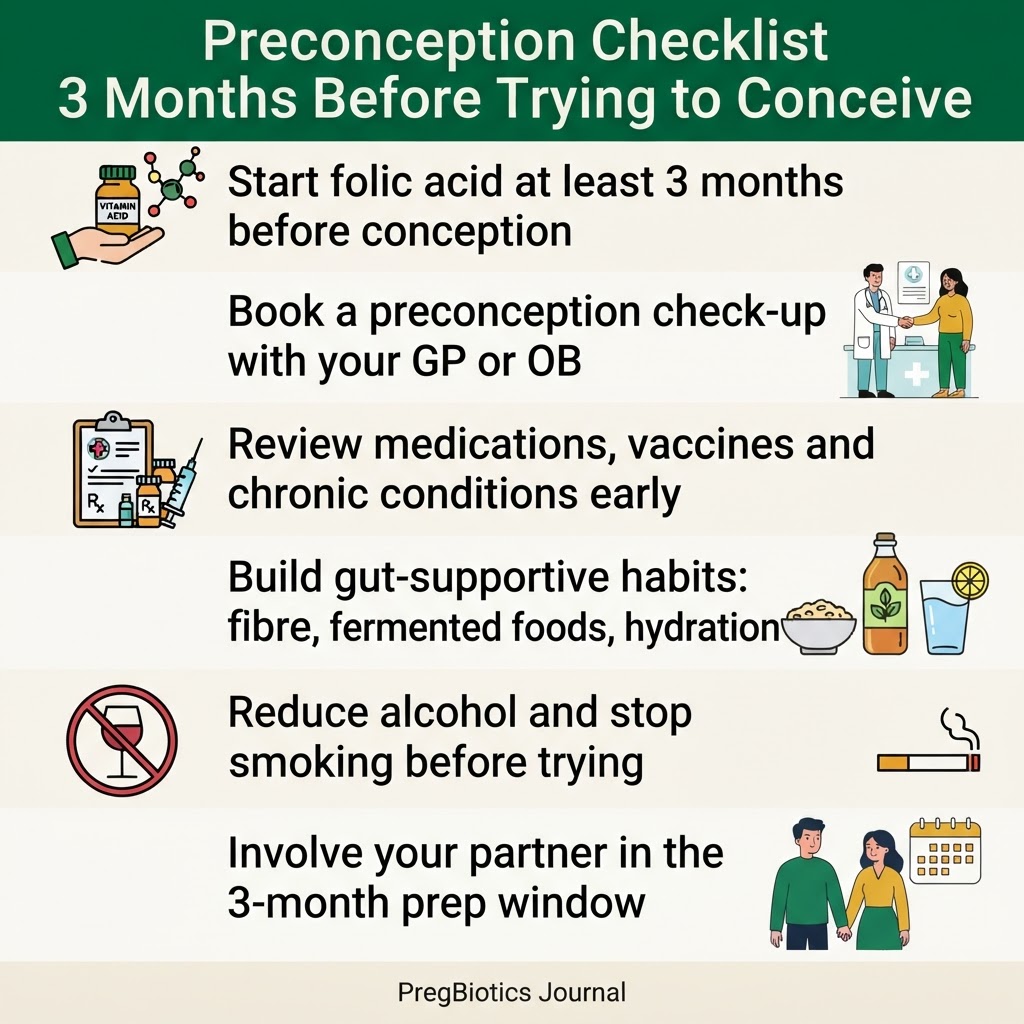
A Quick-Reference Preconception Checklist 3 Months Before Trying
Here's the condensed version for your fridge or notes app:
3 months before:
- Book a preconception medical visit
- Start folic acid supplementation
- Review current medications with your provider
- Confirm vaccination status (especially rubella)
2 months before:
- Build gut-supportive eating habits
- Reduce alcohol; stop smoking
- Involve your partner in lifestyle review
1 month before:
- Track your cycle
- Prioritise sleep and stress-reducing routines
- Complete a dental check-up
When to Loop In Your Healthcare Provider
A checklist is a helpful structure, but it's not a substitute for individualised medical guidance. Speak to your healthcare provider early — especially if you have a chronic condition like diabetes, thyroid disease, or a history of pregnancy complications. They may suggest additional screening or a longer preparation window.
"Preconception care offers an important opportunity to identify and modify biomedical, behavioural and social risks before pregnancy begins." — National Institute of Child Health and Human Development (NICHD), Preconception Care overview
If you're also curious about how your vaginal and gut microbiome specifically relate to conception, our earlier piece on the vaginal microbiome and getting pregnant explores that connection further.
Your Simplest First Step
If this checklist feels like a lot, start with just one thing this week: book your preconception appointment and begin a daily folic acid routine. Everything else can follow in its own time.
For mothers wanting extra gut and nutrient support during this preparation window, our PregBiotics Conception formula was designed specifically for this stage — one small, considered step among many.
And if you'd like these kinds of practical, evidence-informed guides delivered as you move through each stage of trying to conceive, pregnancy and beyond, subscribe to the PregBiotics Journal — we'd love to walk this road with you.
This article is for educational purposes and does not replace personalised medical advice. Always speak to your healthcare provider about your specific health history before making changes to supplements or medications.
Further reading: ACOG — Good Health Before Pregnancy · WHO — Preconception Care · NICHD — Preconception Care
Get the PregBiotics Journal in your inbox
Gut-smart guidance for conception, pregnancy and breastfeeding — twice a week, plus member-only offers. Unsubscribe anytime.
You deserve to feel beautifully supported.
Join thousands of mothers on the PregBiotics journey. Receive your free Pregnancy Prep Guide and gentle, science-backed wisdom — tailored to where you are right now.