Vaginal Microbiome and Getting Pregnant: What Happens Before Conception
Discover how the vaginal microbiome and getting pregnant are linked, from cycle changes to cervical mucus, and simple steps to support balance while trying to c
Dr. Chomba Chuma, MD & Founder
MD & Founder, PregBiotics

When most of us think about preparing for pregnancy, we think about folate, ovulation apps, and maybe cutting back on coffee. Few of us think about the tiny ecosystem living in the vagina — yet the link between the vaginal microbiome and getting pregnant is one of the most fascinating (and under-discussed) areas of preconception science. This community of bacteria doesn't just sit quietly; it actively shapes the environment sperm must travel through, the mucus that carries them, and the terrain your body prepares for a possible pregnancy each month.
As a medical doctor who has spent years researching maternal microbiome health, I find this topic deeply empowering. It's not about adding more pressure to the already overwhelming journey of trying to conceive. It's about understanding your body a little more deeply — and recognising that small, evidence-based habits can meaningfully support this environment.
Why the Vaginal Microbiome and Getting Pregnant Are More Connected Than You Think
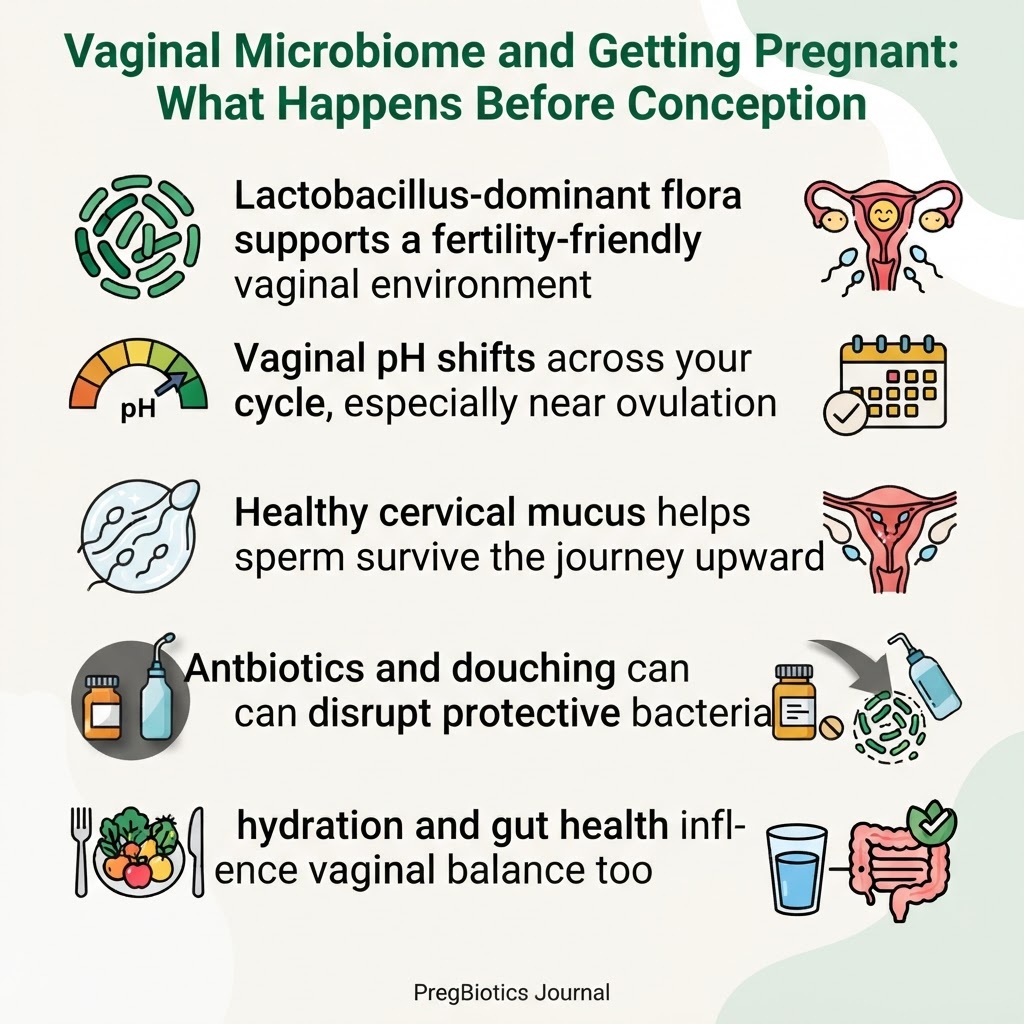
The vagina is home to its own distinct microbial community, separate from the gut, though the two do influence one another. In most reproductive-age women, this community is dominated by Lactobacillus species — bacteria that produce lactic acid and keep the vaginal environment mildly acidic.
This acidity isn't incidental. It helps keep potentially harmful organisms in check and contributes to an environment more hospitable to conception. Research mapping the vaginal microbiome has shown that women with Lactobacillus-dominant communities tend to have more stable, lower-inflammation vaginal environments compared to those with more diverse, less Lactobacillus-rich profiles.
"The vaginal microbiota is a key component of female reproductive health, and its composition is closely associated with susceptibility to infection and reproductive outcomes." — Ravel et al., Proceedings of the National Academy of Sciences, 2011
This doesn't mean a diverse microbiome automatically means trouble conceiving — human biology is rarely that simple. But it does mean that vaginal microbial balance is now recognised as a quiet but meaningful piece of the fertility puzzle, alongside hormones, ovulation timing, and overall health.
If you want a deeper dive into what happens after fertilisation, our earlier piece on the vaginal microbiome and implantation explores that stage specifically. This article focuses on the window before and during conception itself.
The Lactobacillus-Dominant Ecosystem: Your Natural Fertility Ally
Think of Lactobacillus bacteria as quiet gatekeepers. They:
- Produce lactic acid, keeping vaginal pH typically between 3.8 and 4.5
- Compete with less helpful organisms for space and nutrients
- Produce compounds that may help limit overgrowth of certain bacteria
- Support a lower-inflammation local environment
When this balance shifts — a state sometimes called dysbiosis — the vaginal pH tends to rise, and a more diverse mix of bacteria can take hold. This shift has been associated in research with higher rates of bacterial vaginosis and, in some studies, with changes in natural conception timelines and assisted reproduction outcomes.
It's important to say clearly: having an imbalance does not mean you won't conceive. Many women with less-than-ideal vaginal flora go on to have healthy pregnancies. But supporting balance where possible is a reasonable, low-risk step worth understanding.
Signs Your Vaginal Microbiome May Be Out of Balance
- Unusual odour, particularly a fishy smell
- Thin, grey or watery discharge
- Itching or irritation that isn't related to a yeast infection
- Recurrent bacterial vaginosis episodes
If you notice any of these, it's worth a conversation with your healthcare provider rather than self-diagnosing — some symptoms overlap between conditions that need different approaches.
How Your Menstrual Cycle Reshapes the Vaginal Microbiome
Here's something many women don't realise: your vaginal microbiome isn't static. It shifts across your menstrual cycle in response to changing oestrogen and progesterone levels.
- Follicular phase (post-period, pre-ovulation): Rising oestrogen tends to support Lactobacillus growth and glycogen production in vaginal cells, which Lactobacillus feeds on.
- Ovulation: Oestrogen peaks, often correlating with the most Lactobacillus-dominant, lower-pH state of the cycle — potentially the most favourable window.
- Luteal phase: Progesterone rises, and some studies note slightly more microbial fluctuation.
- Menstruation: Blood temporarily raises vaginal pH, which can allow brief shifts in bacterial composition.
This cyclical pattern is part of why timing, hormonal health, and vaginal microbiome balance are so interwoven when it comes to getting pregnant. Supporting hormonal regularity — through sleep, stress management, and balanced nutrition — indirectly supports this microbial rhythm too.
Cervical Mucus, Sperm Survival, and the Microbiome Connection
Cervical mucus is often discussed purely as a fertility-tracking tool, but it plays a much bigger biological role. As ovulation approaches, mucus becomes thinner, more alkaline, and more stretchy — classically described as "egg white" consistency.
This change does two things simultaneously:
- It helps sperm travel more efficiently toward the fallopian tubes.
- It temporarily buffers the naturally acidic vaginal environment, which would otherwise be hostile to sperm survival.
A healthy, Lactobacillus-supported vaginal environment appears to work in tandem with this mucus shift rather than against it. Disrupted microbial balance has, in some studies, been associated with altered mucus quality and increased local inflammation — both of which could theoretically make the sperm's journey less efficient, although more research is still needed in this specific area.
"A healthy reproductive tract environment, including balanced vaginal flora, is one of several interconnected factors supporting natural fertility." — World Health Organization, Sexual and Reproductive Health guidance
This is also where nutrition intersects with microbiome health. Our guide on what to eat when trying to conceive covers food choices that support hormonal balance, which indirectly supports this whole system.
Common Disruptors: Antibiotics, Douching, and Hormonal Changes
Certain everyday choices can unintentionally disrupt vaginal microbial balance:
- Antibiotics: While sometimes medically necessary, broad-spectrum antibiotics can reduce Lactobacillus populations alongside harmful bacteria.
- Douching: Washing inside the vagina disrupts the natural pH and microbial environment; most medical bodies, including ACOG, advise against it.
- Scented products: Soaps, sprays, and scented pads can irritate delicate tissue and shift pH.
- Unprotected changes in sexual partners: Semen itself is alkaline and can temporarily shift vaginal pH, which is a normal, short-term occurrence rather than something to worry about.
- Smoking: Has been associated in research with reduced Lactobacillus dominance.
- Chronic stress: Can influence hormone levels that indirectly affect the vaginal environment.
None of these factors guarantee a fertility problem — but being aware of them allows you to make more informed day-to-day choices while trying to conceive.
A Note on the Gut-Vaginal Connection
The gut and vaginal microbiomes are not identical, but they do communicate. Gut bacteria influence systemic inflammation, hormone metabolism (including oestrogen recycling via the "estrobolome"), and immune signalling — all of which can ripple outward to affect vaginal health. If you're curious how this broader system works, our article on how your gut microbiome affects fertility explains the gut side of this equation in more depth.
Practical Steps to Support Vaginal Microbiome and Getting Pregnant Naturally
You cannot control every variable, and that's okay. But there are gentle, evidence-informed habits that may help support a balanced vaginal environment while you're trying to conceive:
- Avoid douching entirely — the vagina is self-cleaning
- Choose unscented, pH-neutral products for external washing only
- Wear breathable cotton underwear to reduce moisture build-up
- Stay hydrated to support healthy mucus production
- Eat a fibre-rich, whole-food diet to support both gut and systemic hormonal balance
- Limit unnecessary antibiotic use — always complete prescribed courses, but avoid self-medicating
- Manage stress through sleep, movement, or mindfulness practices, since cortisol can influence reproductive hormone balance
- Speak to your healthcare provider about recurrent infections rather than repeatedly self-treating with over-the-counter products
Some women also explore targeted probiotic strains studied for their association with vaginal and reproductive health, alongside these lifestyle habits. If you're exploring preconception support more broadly, our PregBiotics Conception formula was developed with this preconception window in mind — though it's one part of a bigger picture, not a standalone solution.
When to See Your Healthcare Provider
It's worth booking an appointment if you experience:
- Recurrent bacterial vaginosis or yeast infections
- Persistent unusual discharge or odour
- Pain during intercourse
- Difficulty conceiving after 12 months of trying (or 6 months if you're over 35)
Your provider may assess vaginal pH, discharge, and overall reproductive health as part of a broader fertility workup. This is also a good time to discuss any supplements or probiotics you're considering, particularly around timing and strain selection.
"Couples should seek evaluation after 12 months of unprotected intercourse without conception, or sooner if risk factors are present." — American College of Obstetricians and Gynecologists (ACOG), Infertility FAQ
For broader context on infertility prevalence and when evaluation is recommended, the World Health Organization's fact sheet on infertility is a helpful, reputable starting point.
Your Simplest First Step
Understanding the connection between the vaginal microbiome and getting pregnant isn't about perfection — it's about small, sustainable choices that support your body's natural rhythms. Start with the basics: skip the douching, support your gut with whole foods, manage stress where you can, and have an open conversation with your healthcare provider about your specific history.
If you're ready to support your preconception journey with a formula designed around this life stage, explore PregBiotics Conception or browse the full PregBiotics range to find what fits your needs.
And if you'd like more evidence-based guidance like this delivered straight to you, subscribe to the PregBiotics Journal — we're here for every stage of this journey, from preconception to postpartum.
Get the PregBiotics Journal in your inbox
Gut-smart guidance for conception, pregnancy and breastfeeding — twice a week, plus member-only offers. Unsubscribe anytime.
You deserve to feel beautifully supported.
Join thousands of mothers on the PregBiotics journey. Receive your free Pregnancy Prep Guide and gentle, science-backed wisdom — tailored to where you are right now.