Morning Sickness Relief: Natural Ways That Actually Help You
Discover morning sickness relief natural ways backed by science—from the GDF15 hormone link to ginger, gut support, and when to call your provider.
Dr. Chomba Chuma, MD & Founder
MD & Founder, PregBiotics

If you're reading this with a packet of dry crackers in one hand and your phone in the other, you are not alone. Searching for morning sickness relief natural ways is one of the most common things expecting mothers do in the first trimester, often before they've even told anyone they're pregnant. The good news is that there is real science behind why this happens — and real, gentle strategies that can help you feel more like yourself again.
As a doctor who has spent years studying the maternal gut and hormone axis, I want to walk you through what's actually happening in your body, and which natural approaches have genuine evidence behind them — not just internet folklore.
Why Morning Sickness Happens: Hormones, Hunger, and a New Discovery
For decades, nausea and vomiting of pregnancy was blamed almost entirely on rising hCG. That's part of the story, but it's not the whole picture.
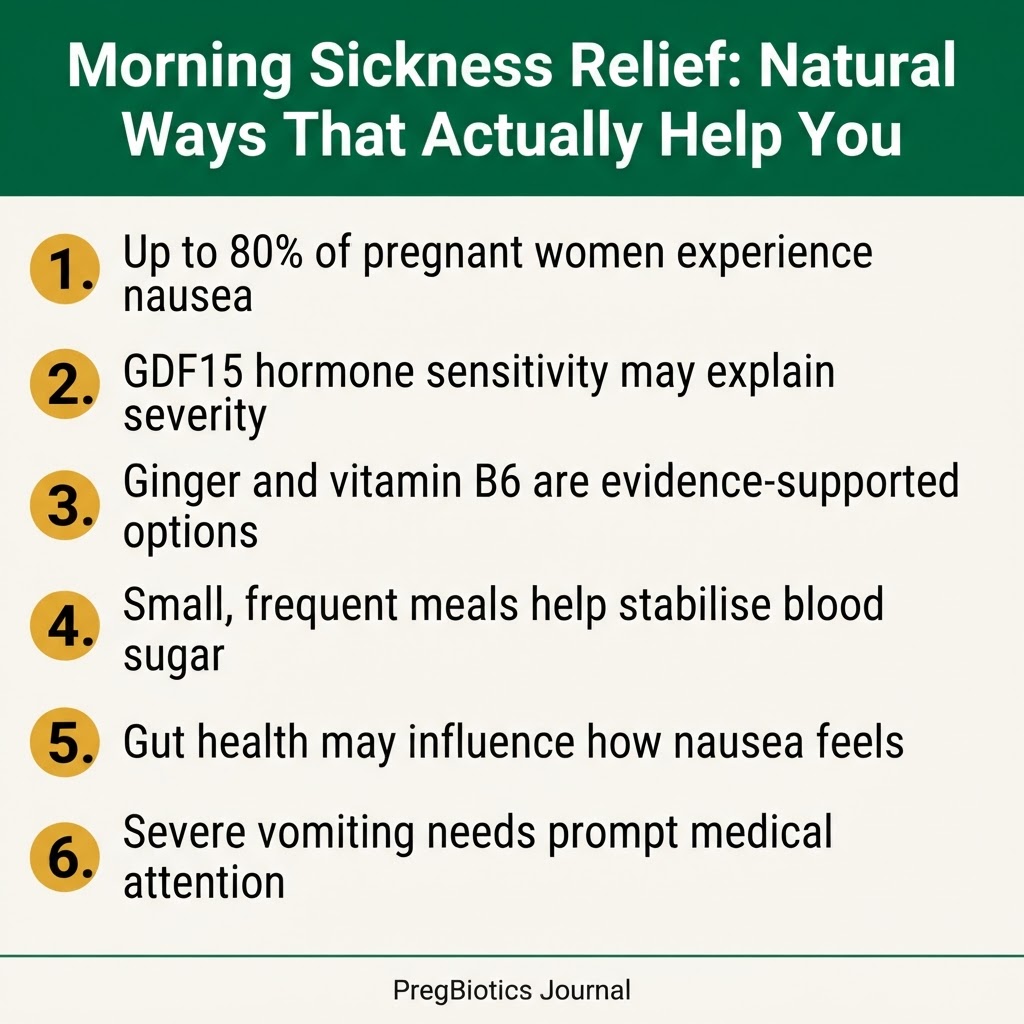
"Nausea and vomiting affect up to 80% of pregnant women, with symptoms typically peaking between weeks 9 and 10 and improving by 16 to 20 weeks." — ACOG, Frequently Asked Questions on Morning Sickness
Blood sugar dips, an empty stomach, heightened smell sensitivity, and shifting gut motility all play a role too. Many mothers notice their nausea is worse first thing in the morning simply because their stomach has been empty for hours overnight.
The GDF15 Discovery
In late 2023, researchers led by Dr. Marlena Fejzo published landmark findings showing that a hormone called GDF15 — produced by the placenta — is strongly linked to how severe nausea and vomiting become. Mothers who had low GDF15 exposure before pregnancy (meaning their bodies weren't "primed" for it) tended to experience more intense sickness once pregnant, because the sudden surge felt unfamiliar to their system.
This matters because it reframes morning sickness as a biological sensitivity, not a personal failing or something you're doing wrong. Your body isn't broken — it's responding to a hormone signal in a way that's partly determined by your own baseline biology.
Morning Sickness Relief Natural Ways: What the Evidence Actually Supports
There's no shortage of home remedies floating around, but a handful have been studied seriously enough to trust.
Ginger
Ginger remains one of the best-studied natural options for nausea in pregnancy. Clinical trials have shown it may help reduce the frequency and intensity of nausea for many women, with a favourable safety profile at food-level doses (tea, crystallised ginger, ginger capsules within recommended amounts).
Vitamin B6 (Pyridoxine)
Vitamin B6 is one of the most widely recommended first-line options by obstetric bodies internationally. It's often combined with doxylamine in clinical settings, but even on its own, many mothers report it takes the edge off persistent queasiness.
Acupressure
Wristbands that apply pressure to the P6 (Neiguan) point have been studied for pregnancy-related nausea, with some women reporting meaningful relief. It's low-risk, inexpensive, and worth trying if you'd prefer a non-ingested option.
"Non-pharmacological measures, including dietary adjustment, ginger, and acupressure, should be considered as first-line approaches for mild to moderate nausea and vomiting in pregnancy." — NICE, Antenatal Care Guideline NG201
Small Shifts, Big Relief: Daily Natural Ways to Calm Nausea
Beyond specific remedies, the rhythm of your day matters enormously. Small, consistent changes often outperform any single "miracle" fix.
- Eat something small before you even get out of bed — a plain biscuit or rice cake can blunt the worst of morning nausea
- Keep meals small and frequent rather than three large ones; an empty stomach tends to worsen nausea
- Separate fluids from solids slightly if a full stomach feels uncomfortable
- Favour bland, cool, or room-temperature foods when strong smells trigger queasiness
- Get fresh air and gentle movement where possible — stuffy rooms can intensify nausea
- Prioritise sleep; fatigue lowers your tolerance for everything, nausea included
None of these need to be perfect. On a hard day, surviving on dry toast and ginger tea is a completely reasonable strategy.
The Gut Microbiome's Quiet Role in How Nausea Feels
Your gut and your sense of nausea are more connected than most people realise. The gut houses the vagus nerve's sensory endings and produces much of the body's serotonin — a chemical messenger closely tied to the nausea response.
Early pregnancy brings genuine shifts in gut motility and microbial balance, partly influenced by rising progesterone. A gut environment that is already under strain from these hormonal shifts may respond more sensitively to the nausea signals triggered by hCG and GDF15.
This doesn't mean gut support will make nausea disappear — no supplement or food can promise that — but supporting overall gut balance through this transition is a reasonable, gentle piece of the puzzle rather than the whole solution. If you're also dealing with sluggish digestion alongside the nausea, our in-depth piece on constipation in pregnancy covers natural relief strategies that often overlap with first trimester discomfort.
When Morning Sickness Needs Medical Attention
It's important to know the line between normal first trimester nausea and something that needs prompt care.
Speak to your healthcare provider promptly if you experience:
- Inability to keep any fluids down for 24 hours
- Significant weight loss
- Signs of dehydration — dark urine, dizziness, rapid heartbeat
- Vomiting blood or severe abdominal pain
These can be signs of hyperemesis gravidarum, a more serious condition that requires medical management beyond natural remedies. There is no shame in needing extra support here — this condition is physiological, not a sign you're failing at pregnancy.
"Severe, persistent vomiting in pregnancy warrants clinical evaluation for hyperemesis gravidarum, which carries risks of dehydration and nutritional deficiency if untreated." — World Health Organization, Antenatal Care Guidelines
For broader context on how your body's internal ecosystem shifts across these early weeks, our article on why your gut health changes dramatically during pregnancy is a useful companion read.
Supporting Your Body Between Waves of Nausea
On the days nausea eases, use the window to rebuild.
- Sip electrolyte-containing fluids to stay ahead of dehydration
- Reintroduce protein and fibre gently once your stomach allows it
- Rest without guilt — your body is doing enormous work in the background
- Keep prenatal nutrients consistent where tolerated, adjusting timing around meals if needed
Many mothers find that a steady foundation — good hydration, gentle nutrition, and gut-conscious choices — makes the unpredictable days a little more manageable, even if it can't erase them entirely.
For reliable background reading, the World Health Organization's recommendations on antenatal care for a positive pregnancy experience offer a thorough, evidence-based overview of first trimester wellbeing, and the ACOG FAQ on morning sickness is a trustworthy, plain-language resource worth bookmarking.
Your Simplest First Step
If nausea has made even basic nutrition feel like a battle, start small: pick one gentle habit from this list — ginger tea, a pre-bed biscuit, or a short walk — and give it a few days before adding another. Supporting your gut foundation alongside these daily habits is something many mothers find worthwhile during this transition; you can explore PregBiotics Essentials as a gentle, gut-focused option formulated for pregnancy, and always speak to your healthcare provider before starting anything new, especially if nausea is severe.
If this article helped you feel a little more understood today, consider subscribing to the PregBiotics Journal — we're here with you, one evidence-based article at a time.
Get the PregBiotics Journal in your inbox
Gut-smart guidance for conception, pregnancy and breastfeeding — twice a week, plus member-only offers. Unsubscribe anytime.
You deserve to feel beautifully supported.
Join thousands of mothers on the PregBiotics journey. Receive your free Pregnancy Prep Guide and gentle, science-backed wisdom — tailored to where you are right now.