
Bloating in Early Pregnancy: Why It Happens So Fast
Wondering about bloating in early pregnancy — why it starts before a missed period and what it means for your gut? Dr. Chuma explains the hormonal science.
Dr. Chomba Chuma, MD & Founder
MD & Founder, PregBiotics
If you're asking about bloating in early pregnancy — why it shows up so suddenly, sometimes before you've even taken a test — you are not imagining it. Many mothers describe feeling "two months pregnant" in their waistline within days of conception. There is real, measurable physiology behind this, and understanding it can take away a lot of the worry that comes with an unfamiliar body.
As a doctor who has spent years studying maternal gut health, I want to walk you through the actual mechanics of early pregnancy bloating — not just the symptom, but the biological story underneath it.
Bloating in Early Pregnancy: Why It Starts Before You Even Miss a Period
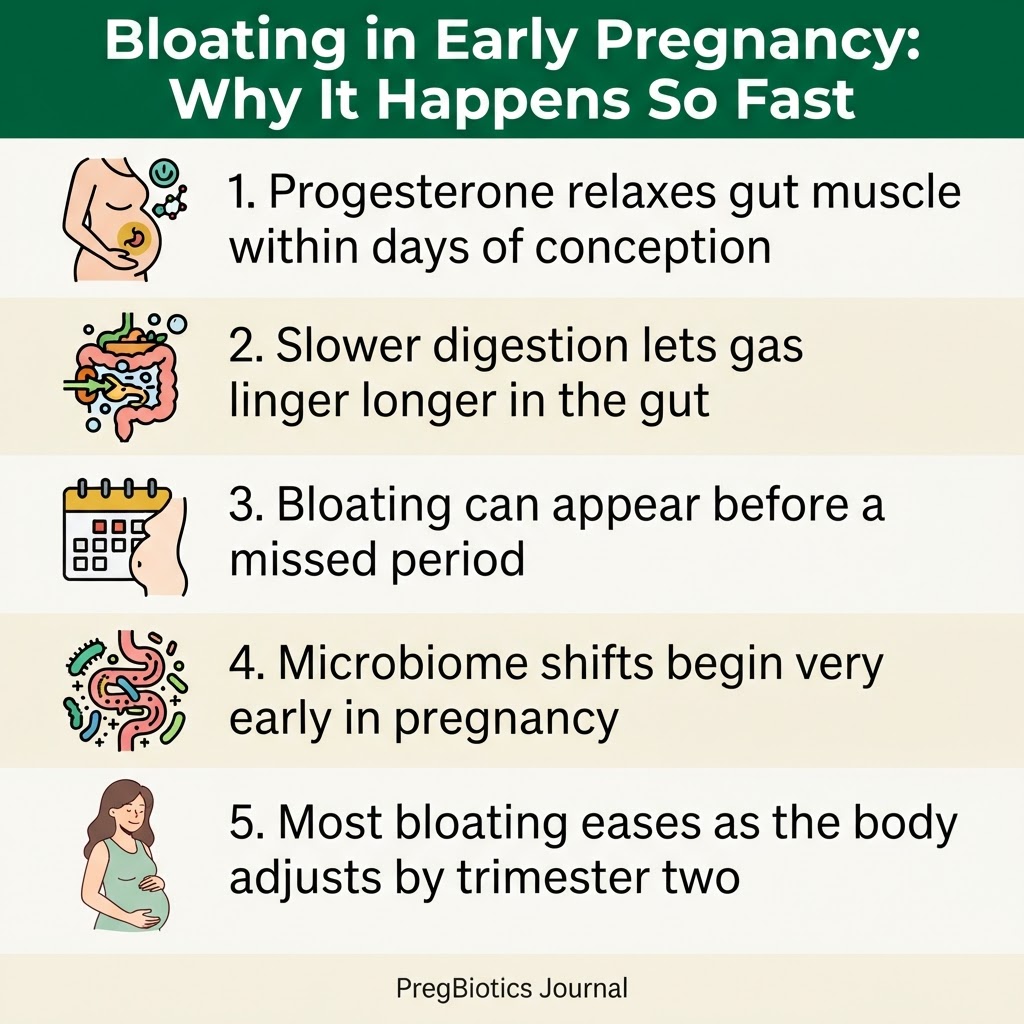
The short answer is hormones — specifically progesterone — but the timeline surprises most mothers. Progesterone levels begin rising almost immediately after implantation, roughly 6–10 days after ovulation. This hormone is essential for maintaining the uterine lining and supporting early placental development.
But progesterone doesn't only act on the uterus. It relaxes smooth muscle throughout the body, including the muscle lining your intestines. This is why bloating in early pregnancy can appear remarkably early — often before a missed period, and well before any visible "bump."
"Progesterone-induced smooth muscle relaxation slows gastrointestinal transit time, which can begin within the first weeks of gestation and contributes to bloating, gas retention, and altered bowel habits." — Cappell MS, Gastrointestinal Disorders in Pregnancy, Gastroenterology Clinics of North America
This is a key reason the bloating question deserves its own explanation, separate from constipation or nausea. It is a distinct physiological event with its own timeline.
The Hormone Behind Early Pregnancy Bloating: Progesterone's Role
To understand why bloating in early pregnancy feels so dramatic, it helps to picture what progesterone does to the digestive tract specifically.
- It relaxes the smooth muscle of the intestinal wall, slowing the rhythmic contractions (peristalsis) that normally move food and gas along.
- Slower transit means gas has more time to accumulate before it's expelled.
- The lower esophageal sphincter also relaxes, which is part of why reflux often appears alongside bloating.
- Water absorption in the colon increases slightly, which can make stool firmer and contribute to a feeling of fullness.
These changes aren't a malfunction — they're a feature. The same relaxation that slows your gut also protects your pregnancy, because that same smooth-muscle effect keeps the uterus calm and resistant to premature contractions. Your body is, in a sense, trading digestive comfort for pregnancy stability in those early weeks.
This is also why bloating often appears alongside other early signs — fatigue, tender breasts, and the nausea we covered in depth in our piece on nausea all day in pregnancy. They share a hormonal root even though they feel like separate symptoms.
Why Bloating in Early Pregnancy Feels Worse Than You Expected
Many mothers tell me the same thing: "I knew pregnancy would change my digestion eventually — I didn't expect it in week four." Three overlapping factors explain the intensity.
1. Reduced gut motility
As covered above, slower transit means more time for bacterial fermentation of food in the colon, which produces gas. Even normal, healthy foods can feel more gas-producing than they did before conception.
2. Early microbiome shifts
Research has shown that the gut microbiome begins shifting composition from the first trimester onward, partly in response to rising hormones and partly due to changes in diet, stress, and immune signaling. These shifts can temporarily alter how efficiently certain fibres and sugars are broken down, which affects gas production.
3. Heightened body awareness
It's worth saying plainly: once you suspect or know you're pregnant, you tend to notice your abdomen more closely. Bloating that might have gone unnoticed before conception can suddenly feel significant, simply because you're paying closer attention.
"Early pregnancy is associated with measurable changes in gut transit time and bowel habit, independent of dietary changes, beginning as early as the first trimester." — World Health Organization, maternal physiology briefing materials
None of this means something is wrong. It means your gut is adapting to a genuinely new hormonal environment, and that adaptation takes a few weeks to settle.
Bloating vs Other Early Pregnancy Symptoms: How to Tell the Difference
Because early pregnancy brings a cluster of new sensations, it helps to know what tends to be "ordinary" bloating versus something that overlaps with other concerns.
Typical early pregnancy bloating usually:
- Comes on gradually over the first few weeks
- Feels like tightness or fullness rather than sharp pain
- Eases somewhat after passing gas or a bowel movement
- Fluctuates through the day, often worse in the evening
Worth mentioning to your provider:
- Bloating paired with severe, localised, or one-sided pain
- Bloating with fever, vomiting, or an inability to keep fluids down
- Any bleeding alongside abdominal discomfort
- Bloating that doesn't ease at all despite gentle movement, hydration, and regular bowel habits
This is not a diagnostic list — it's a guide to help you know when a conversation with your midwife or doctor is the right next step. Early pregnancy bloating is common and expected, but your healthcare provider can always confirm that what you're feeling fits the usual pattern.
How Long Does Early Pregnancy Bloating Typically Last?
Most mothers notice bloating easing somewhat as they move into the second trimester, though it rarely disappears entirely — it simply changes shape as the growing uterus itself begins contributing to abdominal pressure.
A rough, general pattern many mothers describe:
- Weeks 4–8: Hormonal bloating begins, often before other symptoms are obvious.
- Weeks 9–13: Bloating may peak alongside nausea and fatigue, as progesterone continues climbing.
- Second trimester: Digestive rhythm often becomes more predictable, though bloating can return later in pregnancy for mechanical reasons (a growing uterus, not hormones).
If you're also navigating sluggish bowel movements during this window, our detailed guide on constipation in pregnancy covers the overlapping mechanisms in more depth, since constipation and bloating frequently travel together.
Supporting Your Gut Through This Transition
While this article focuses on the why rather than a full management plan, there are a few gentle, evidence-informed habits worth knowing as you adjust:
- Smaller, more frequent meals reduce the volume of food sitting in a slower-moving gut at any one time.
- Steady hydration supports healthy stool consistency, which indirectly eases gas buildup.
- Gentle movement, like short walks, can encourage normal gut motility without overexertion.
- Consistent fibre intake, introduced gradually, helps avoid sudden fermentation spikes that worsen gas.
- A pregnancy-appropriate probiotic may help support the gut environment during this hormonal shift, though it's always worth discussing any new supplement with your healthcare provider first. Our article on whether probiotics are safe in pregnancy goes into the evidence in more detail.
These aren't quick fixes — they're small, consistent supports for a digestive system that is genuinely working differently than it was a month ago.
A Note on Expectation and Reassurance
I often tell mothers in my clinic: your body is not malfunctioning, it is recalibrating. The same hormone that is making your gut feel unpredictable is also the hormone holding your pregnancy steady. That trade-off is not a flaw in the system — it is the system working as it should.
"Reassurance about the physiological basis of early pregnancy gastrointestinal symptoms can meaningfully reduce maternal anxiety, particularly when symptoms begin before clinical confirmation of pregnancy." — American College of Obstetricians and Gynecologists, patient education materials
Understanding the why doesn't erase the discomfort, but it often makes it easier to sit with — and easier to know when it's simply part of early adaptation versus a reason to call your clinic.
Your Simplest First Step
You don't need to solve early pregnancy bloating in one day. The simplest first step is to support your gut gently and consistently, rather than reaching for anything drastic.
If you're looking for a pregnancy-appropriate probiotic formulated with this transitional period in mind, our PregBiotics Essentials range was designed to support maternal gut balance from the earliest weeks onward — always alongside your healthcare provider's guidance, not instead of it.
And if you'd like more explanations like this one — grounded in real physiology, written for real mothers — subscribe to the PregBiotics Journal so the next piece lands straight in your inbox.
This article is for educational purposes and does not replace personalised medical advice. Please speak to your healthcare provider about any new or persistent symptoms in pregnancy.
Get the PregBiotics Journal in your inbox
Gut-smart guidance for conception, pregnancy and breastfeeding — twice a week, plus member-only offers. Unsubscribe anytime.
You deserve to feel beautifully supported.
Join thousands of mothers on the PregBiotics journey. Receive your free Pregnancy Prep Guide and gentle, science-backed wisdom — tailored to where you are right now.